


Group Therapy: How Shared Healing Transforms Individual Recovery
Key Takeaways
- Group therapy is a structured treatment where a few people heal together, guided by a trained therapist.
- Research finds it about as effective as individual therapy, and sometimes more so for connection.
- Its secret ingredient is universality, the relief of discovering you are not alone.
- It builds real-world skills, like communication and trust, that one-on-one therapy cannot replicate.
- Walking into a group is scary for almost everyone. That fear fades fast.
It might seem contradictory at first. You’re feeling like you’re in a very difficult situation, maybe at your weakest point, and the advice is to walk into a room full of strangers and share it. All of your instincts are telling you otherwise. Keep it private. Hide.
However, group therapy is one of the most effective tools in recovery, and the reason is what happens in the room.
What Is Group Therapy and Why It Matters for Mental Health Support
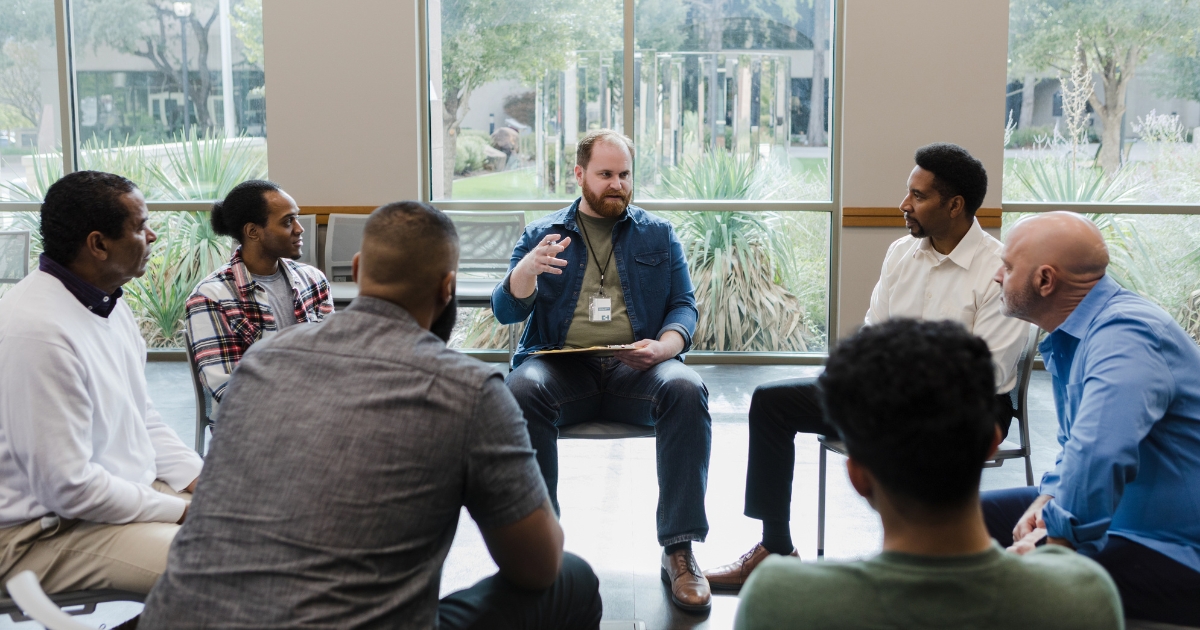
Group therapy is a treatment method in which a small group of individuals, typically with the assistance of one or two trained therapists, cope with their issues as a group. It’s not a support meeting, and it’s not a free-for-all. It’s structured, professional mental health support. In fact, several studies show that group therapy is as effective as individual therapy, and offers added benefits such as greater self-worth, stronger social skills, and a deeper sense of support, says the Cleveland Clinic, a not-for-profit academic medical center. It’s the last part that makes the difference.
This can be useful to visualize what group therapy can provide in addition to individual treatment.
| Individual therapy | Group therapy |
| One-on-one with a therapist. | Shared healing with peers who understand. |
| Deep, private focus on you. | Real-time practice with other people. |
| Insight from one expert. | Feedback from many who have been there. |
| Can feel isolating at times. | Directly breaks the isolation itself. |
The Foundation of Shared Healing in Therapeutic Groups
Therapeutic groups are built on one simple, powerful idea: you are not in this alone. It is perhaps the most healing aspect of a group; therapists refer to it as universality, and it is:
- Hearing someone else voice your private struggle loosens its shame.
- You discover your worst thoughts are not so uncommon.
- The lonely burden of pain begins to lighten as soon as possible.
- You really feel heard and understood in a way that is difficult to communicate otherwise.
How Group Counseling Builds Interpersonal Skills and Emotional Processing
This is something group counseling can do that individual therapy can’t. It gives you other people to practice with in real time. All of this stuff that we struggle with is all very apparent in our relationships with people. A group becomes a kind of “living lab” for building interpersonal skills: a place to try new ways of relating and get feedback on how they land.
Developing Authentic Communication in Safe Spaces
A good group is one of the few settings where one can be totally authentic without the usual repercussions. That safety allows you to try things that you might not try in other places:
- Expressing thoughts and feelings rather than what is expected.
- Establishing a limit and seeing the relationship make it through!
- Seeking help and not hinting and hoping.
- When someone is in disagreement, don’t run away; work it out.
Processing Emotions Through Peer Feedback
The therapist provides professional input. There’s something else and something no less important; your peers offer up the view from the same road. When all those who know and understand you say it to you, in a sincere and loving manner, it has a way of sinking in. They’ve been there, where you are. When they point out a pattern you keep repeating, you’re more likely to believe them and this belief can open a door that has been stuck for years.
The Power of Social Connection in Recovery
Loneliness is more than just painful. It’s fodder for every struggle with mental health and substance abuse that exists. Group psychotherapy is as effective as individual psychotherapy for many disorders, according to Indiana Wesleyan University, and is particularly effective in helping people develop a sense of personal accountability and hope. Group therapy addresses loneliness directly, rebuilding the social connection that illness and addiction worked so hard to break.
Peer Support as a Catalyst for Individual Transformation
There’s a type of hope that can only be provided by the sight of someone a handful of steps in front of you along the same trail. Your therapist can inform you that it will get better. With the proof, comes a peer who’s doing it now! One of the unsung mechanisms of group therapy is to observe others who once felt stuck and scared as you do now, get better in real time.
Group Therapy Benefits That Extend Beyond the Session Room
The true test of group therapy benefits isn’t how you feel in the room. It’s what you take out of it. The skills you build and the changes you make don’t stay in the session room. They go home with you, into your relationships, your work, and how you cope with a bad day. You learn how to talk, to trust, to seek assistance, and these skills subtly influence the remainder of your life.
Creating Lasting Change Through Collective Accountability
Magic is created when a group of people is silently cheering for one another. Pressure turns into caring when it comes to accountability:
- You know that others will be asking you about your week, and that will provide you with an excuse to try.
- You don’t want to disappoint those who have come for you.
- Small wins provide the basis for celebrating together – making them real and worth repeating.
Overcoming Common Barriers to Joining Therapeutic Groups
Let’s get right down to the blatant realignment. Many people find group therapy very frightening – and this is totally normal. If you’re in pain, you don’t want to share it with strangers. With this in mind, however, there is good news. Nearly all people have some fear when walking in and this fear diminishes during the session or two. You will never be compelled to share when you are not prepared. You can just listen initially, and most people find that the room quickly becomes cozy.
Begin Your Shared Healing Journey at Silicon Valley Recovery
When you’re feeling down, it’s natural to want to withdraw, but that will only perpetuate the problem. Instead, group therapy is indicated, and the research and the lived experience indicate the same direction. Together is better than alone. That same courage to enter into that room is the same courage that helps you to make it through recovery.
Group therapy is a key component of Silicon Valley Recovery’s approach to helping people heal, along with individual care, without judgment. When you are facing difficulties, you don’t have to do it alone.
Healing happens faster when you are not doing it alone. Reach out to Silicon Valley Recovery, and let us welcome you into a community that gets it.

FAQs
-
How does group therapy reduce feelings of isolation compared to individual counseling?
Group therapy surrounds you with people who are facing similar struggles, which creates an immediate sense that you are not alone. That experience, often called universality, directly reduces the shame and isolation that individual sessions cannot address in the same way. Hearing your own pain echoed by peers tends to be powerfully validating.
-
Can peer feedback in therapeutic groups accelerate emotional healing and personal growth?
Yes, because feedback from people who truly understand your experience often lands differently than advice from a single therapist. Peers can gently point out patterns you cannot see in yourself, and their credibility comes from having lived something similar. That honest, relatable reflection can speed up insight and change.
-
What interpersonal skills improve most through regular group counseling participation?
People tend to grow most in communication, boundary-setting, trust, and healthy conflict. A group acts as a safe practice space where you can try these skills in real time and get immediate feedback. Over time, those abilities carry over into relationships and situations well beyond the therapy room.
-
How does accountability within group dynamics strengthen long-term mental health recovery outcomes?
When a group truly cares about your progress, accountability feels supportive rather than like pressure. Knowing others will check in gives you motivation on hard days, and you are less likely to give up on people who have shown up for you. That shared commitment helps hold gains in place over the long run.
-
Is group therapy effective for people hesitant about sharing personal struggles initially?
Yes, and hesitation is completely normal, since almost everyone feels nervous at first. You are never required to share before you feel ready, and simply listening in the early sessions is a valid and common way to start. Most people find the fear fades quickly as the group begins to feel safe.
References
- Cleveland Clinic. Group Therapy. https://my.clevelandclinic.org/health/treatments/group-therapy.
- Indiana Wesleyan University. The Impact of Group Therapy in Mental Health Treatment. https://www.indwes.edu/articles/2025/02/the-impact-of-group-therapy-in-mental-health-treatment.